
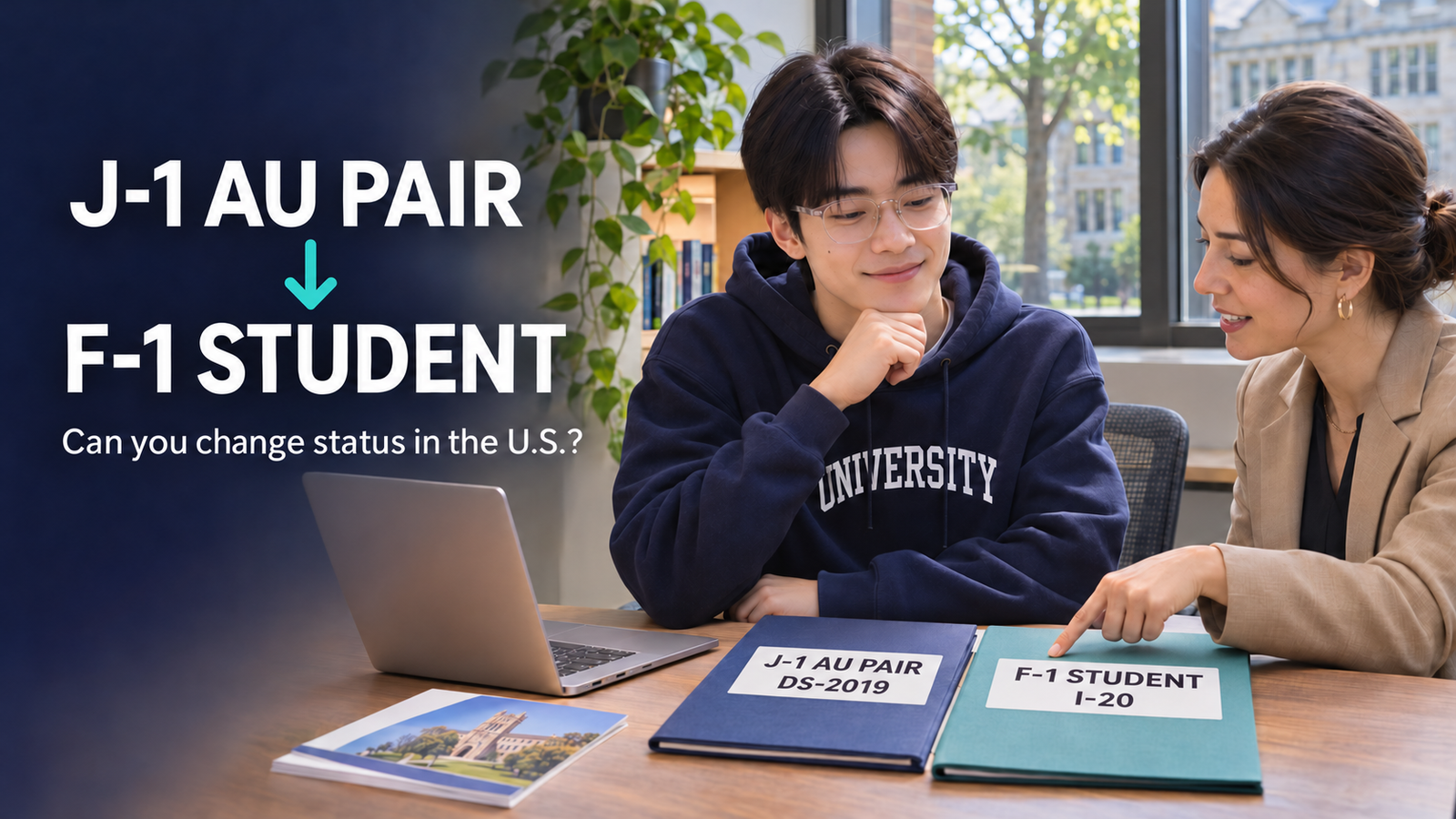
From J-1 Au Pair to F-1 Student: Can You Change Status in the U.S.?
Welbright Consulting · Educational FAQ · Thursday, November 5, 2026
Thinking about college or an English language program after your au pair year? A J-1 au pair may be eligible to request F-1 student status without leaving the United States. The answer depends on your immigration history, current status and whether the two-year home-country requirement applies. Admission to a school alone does not change your status. 8 CFR 248.1
1. Can an au pair apply inside the United States?
Potentially, yes. Generally, you must have been lawfully admitted, maintained your status and filed on time. You will need acceptance at an SEVP-certified school, a Form I-20, payment of the I-901 SEVIS fee and a Form I-539 application to USCIS. Prepare evidence of how you will pay for school and living expenses. USCIS decides the application; an I-20 is not approval. State Department student guidance, USCIS F-1 change-of-status bulletin, July 20, 2021
2. What if I am subject to section 212(e)?
J-1 exchange visitors subject to the two-year home-country physical presence requirement generally cannot change to F-1 inside the United States unless the requirement has been fulfilled or waived. Being an au pair does not, by itself, answer whether you are subject. Government funding, the applicable Skills List and graduate medical training are the principal triggers. Review your J-1 records; if the answer is unclear, request a State Department Advisory Opinion. 8 CFR 248.2, State Department eligibility guidance
The revised Skills List took effect on December 9, 2024. It can remove a requirement based solely on an older Skills List when the country is no longer designated; it does not remove a separate government-funding or medical-training basis. Do not rely only on an old visa annotation. Official December 9, 2024 notice
3. Can I study or keep working while I wait?
Filing does not grant F-1 status or new work permission. Au pairs already have an educational component under J-1 rules, so it is inaccurate to say all study is prohibited while waiting. Any coursework must fit your existing status and program obligations. Coordinate with your sponsor and the school's designated school official (DSO) before changing your schedule. Do not begin activities that require F-1 status before approval, or continue au pair work beyond your authorization. Au pair regulations, BridgeUSA participant guidance
If approval is delayed, work with the DSO to defer the I-20 start date. USCIS's July 20, 2021 policy removed repeated “bridge” applications for otherwise eligible F-1 change-of-status applicants; it did not create an extension of au pair employment. USCIS bulletin, DHS SEVIS guidance
4. Can I apply for an F-1 visa abroad instead?
Yes, that is a separate route. Section 212(e) does not itself prohibit an F-1 visa application abroad, but you must qualify for the visa and admission. Studying in F-1 status does not erase an unmet 212(e) obligation. A change of status approved inside the U.S. also does not put an F-1 visa in your passport. Discuss travel before leaving with a pending application. NIH explanation of 212(e) options, State Department student guidance
5. When should I start planning?
Start before your DS-2019 program ends. Successful completion generally brings a 30-day departure period; termination does not. That departure period is not extra au pair working time. Review your I-94, DS-2019, finances and proposed school dates with your sponsor and DSO, and obtain legal advice about your filing deadline and eligibility. BridgeUSA participant guidance
November 2026 rule update: The September 14, 2026 federal court order postponed the fixed-admission rule's effective date. Do not plan around its new fixed periods as though they are operative. The order is preliminary, so check developments before filing or traveling. Court memorandum and order, pages 47–48
Contact Welbright Consulting for help organizing your education plans. Consult a qualified immigration attorney for advice on your individual status and applications.
General educational information, checked November 5, 2026; not individual legal advice.