
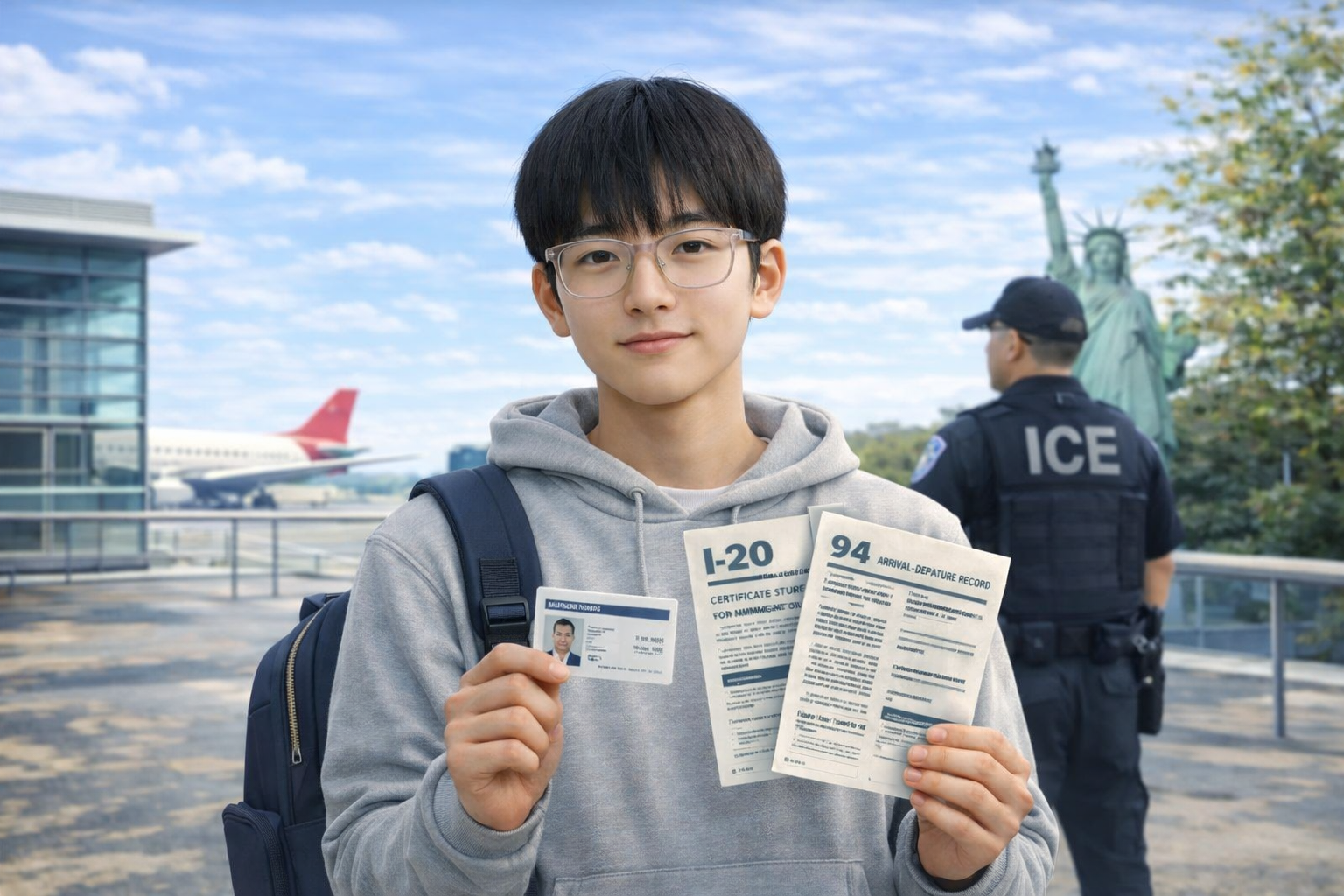
Before Traveling in 2026: What F-1 Students Should Have Ready
Whether you’re hopping on a domestic flight, driving to another state, or traveling internationally, the reality for F-1 students in 2026 is this: you may be asked to prove your immigration status at any time — not just at the border.
With increased immigration enforcement and ICE activity across the country, being prepared is no longer optional. It’s essential.
This guide is not meant to alarm you. It’s meant to empower you. Knowing your rights and having the right documents on hand can make all the difference.
1. You Are Required to Carry Proof of Status — Always
This is the law. Under Section 264(e) of the Immigration and Nationality Act, all non-U.S. citizens age 18 and older are required to carry valid proof of their immigration status at all times — including during domestic travel and everyday activities.
As an F-1 student in good standing, your proof of status includes:
- Your valid passport
- Your valid F-1 visa stamp
- Your most recent I-20 with a current travel signature
- Your most recent I-94 Arrival/Departure record (accessible at i94.cbp.dhs.gov)
💡 Keep digital copies of all documents on your phone or in a secure cloud folder — in addition to physical copies.
2. Know Your Rights If You Encounter ICE
You have constitutional rights regardless of your immigration status. Here is what you should know:
- You have the right to remain silent. You are not required to answer questions about your immigration history or nationality beyond identifying yourself.
- You do not have to consent to a search of your belongings or devices without a warrant.
- You have the right to an attorney. If you are detained, clearly state: “I want to speak to a lawyer.”
- You can ask: “Am I free to go?” If the answer is yes, calmly leave.
- Do not sign any documents without first consulting an attorney.
💡 If ICE comes to your home, you do not have to open the door unless they present a judicial warrant signed by a judge. An administrative warrant (Form I-200 or I-205) does not grant entry rights.
3. Keep Your F-1 Status Clean and Documented
The best protection against any immigration encounter is maintaining a valid, active F-1 status. Make sure:
- You are enrolled full-time every semester (unless authorized otherwise by your DSO)
- Your I-20 program end date is current and accurate
- Your address on file with your school and SEVIS is up to date (required within 10 days of any move)
- You have not engaged in unauthorized employment
- Your SEVIS record is active — confirm this with your DSO if you have any doubts
💡 In 2025, thousands of F-1 students had their SEVIS records unexpectedly terminated by ICE — in some cases without prior notice. Staying in close contact with your DSO is more important than ever.
4. Before Any Trip — Domestic or International
Every time you travel — whether across town or across the world — run through this checklist:
- Passport valid (at least 6 months beyond program end date for international travel)
- F-1 visa stamp valid (required for international re-entry; not needed for domestic travel)
- I-20 with a valid travel signature (12 months for enrolled students; 6 months for OPT/STEM OPT)
- I-94 record is accurate and accessible
- Proof of enrollment from your registrar (especially useful for domestic checkpoints)
- Proof of financial support if traveling internationally (bank statements, scholarship letters)
- If on OPT or STEM OPT: Employment Authorization Document (EAD) + employer offer letter
💡 For international travel: verify your home country’s current U.S. entry status at travel.state.gov before booking. Restrictions can change quickly and with little notice.
5. Be Mindful of Your Digital Presence
As of June 2025, U.S. immigration agencies may review social media activity as part of visa adjudications and entry decisions. Content that raises concerns — even posts that are years old — can be flagged as a negative factor.
Review your public profiles. Be thoughtful about what you share online.
6. Have an Emergency Contact Plan
If you are ever detained or questioned by ICE or law enforcement, having a plan in place beforehand can reduce stress and protect your rights.
- Save your DSO’s phone number in your phone
- Know the contact information for your school’s international student office
- Have the name and number of an immigration attorney or legal aid organization you can call
- Inform a trusted friend or family member of your travel plans
💡 Many universities and nonprofit organizations offer free or low-cost immigration legal consultations. Ask your international student office for a referral.
You’re Not Alone — We’re Here to Help
Navigating life as an F-1 student in 2026 requires awareness, preparation, and the right support. At Welbright Consulting, we work with international students every day to help them understand their options, stay compliant, and move forward with confidence.
Contact us if you have questions about your F-1 status, travel plans, or what to do in a difficult situation. We’re happy to help you think through your next steps.